Hauptstr. 79
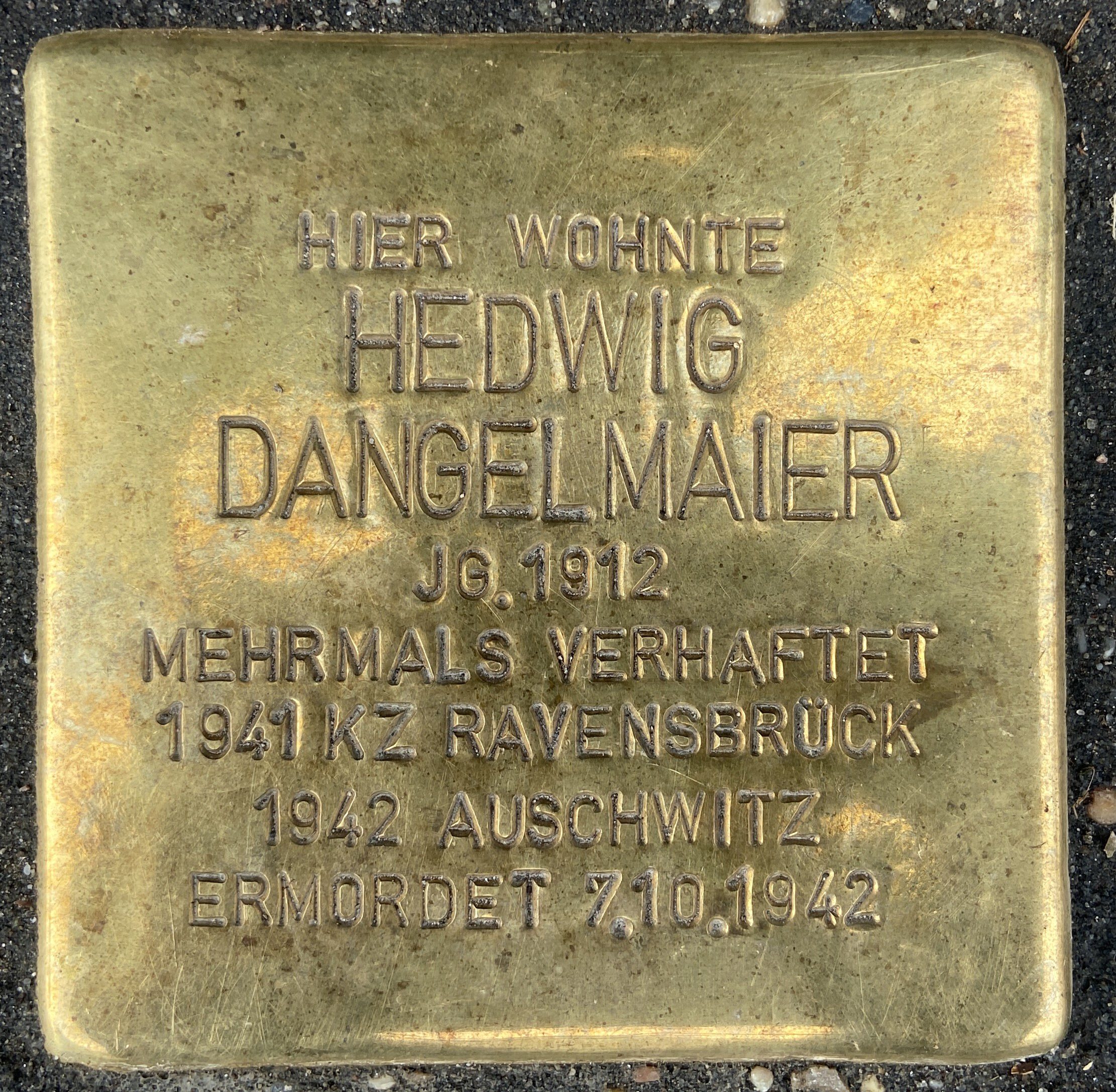
Hedwig Dangelmaier was born on May 1, 1912, in Donzdorf, the seventh of eight children. Her father died in 1915 when she was three years old. He was a wagon maker, but as was customary, the family also lived off a small farm. After school, she probably helped out in her parents’ household and on the farm, wherever she was needed. This was a common prospect for young women from the countryside; alternatively, they took positions as maids.
Two of her sisters emigrate to America in the hope of finding work and prosperity there. We know that their sister Aloisia succeeded in this endeavor. She settled in well in America and regularly visits Donzdorf. Another sister enters a convent in Bingen am Rhein. Their brother Josef becomes a master wheelwright and takes over his parents’ business until he is drafted and killed in Belarus in 1944; their brother Anton falls in Russia in 1944.
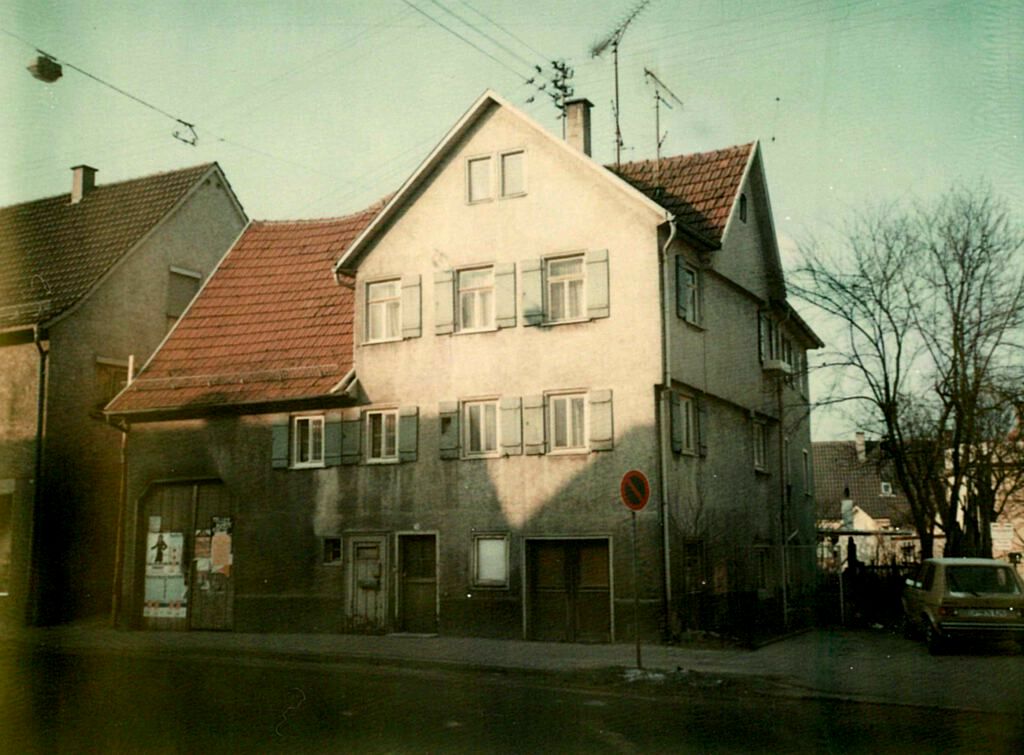
Hedwig lived with her mother at Hauptstraße 79 until 1936. She then moved to Wattenberg near Markdorf for a few months, presumably to take up a position as a seasonal agricultural worker.
In 1937, her life began to unravel. She had to spend two months in hospital in Göppingen (reason: mental illness?) and then moved back in with her family for a few months. From there, she went to Stuttgart in 1938 to the “Mathildenhaus – Schutzheim für Mädchen und Frauen” (Mathildenhaus – shelter for girls and women); today, this would be a facility for homeless people. In between, she took a job as a maid on the island of Reichenau, but returned to Stuttgart.
In August 1939, she was arrested for the first time for “vagrancy” and sent to prison in Heidelberg for 14 days. In February 1940, she returned to Stuttgart for a short time. After that, all traces of her were lost; she was not registered with the police for a whole year. She was probably still in the Stuttgart area when she was picked up in Echterdingen on January 11, 1941, and sent to the Ravensbrück concentration camp as prisoner number 5381. It is not known when she was deported from Ravensbrück to Auschwitz. We know the date of her murder: October 7, 1942. She was 30 years old.
On October 15, 2025, Gunter Demnig laid the first Stolperstein in the town of Donzdorf in memory of Hedwig Dangelmaier on the sidewalk in front of the former building at Hauptstraße 79. It had been demolished in the early 1980s. The memorial ceremony took place on the grounds of her birthplace and home and attracted great interest among the local population.
Sabine Schlotter (her mother was a cousin of Hedwig Dangelmaier) provided insights into the life of the murdered woman. The family knew that she had died in Auschwitz at the age of just thirty, but they did not talk about it. The entry in the family register prompted her to research the circumstances surrounding her fate. She found support from city archivist Carola Eberhardt and Angelika Taudte from the Stolperstein Initiative in Göppingen.
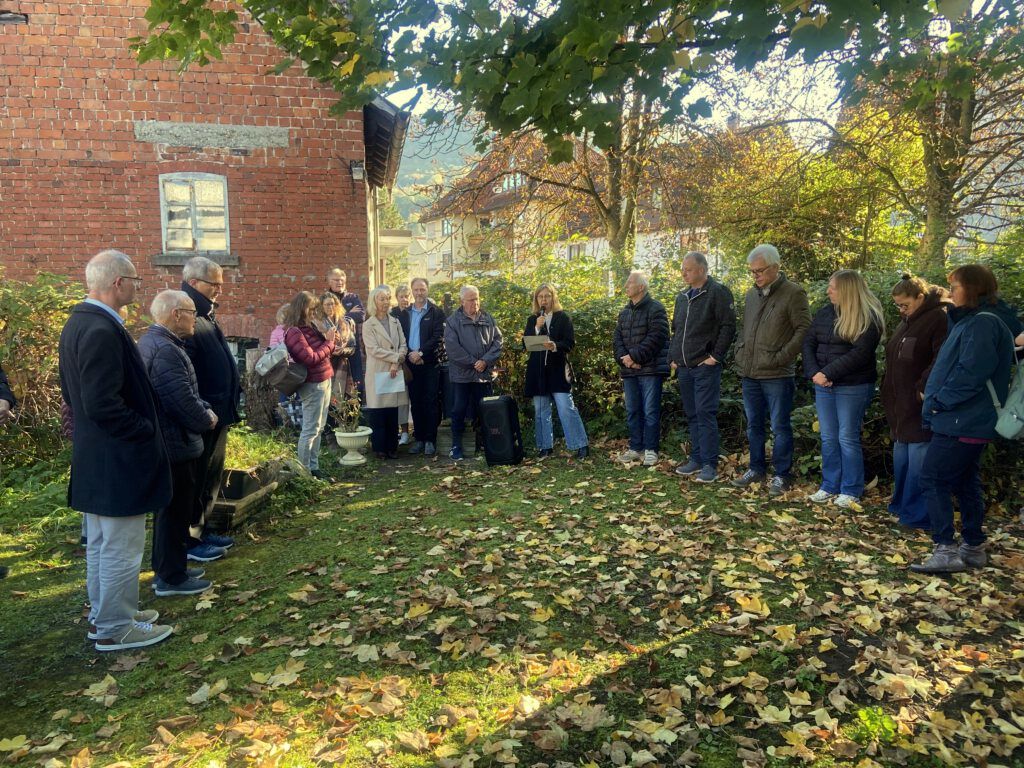
Students from Rechberg High School in Donzdorf took part in the ceremony. They had been involved in a project examining the persecution of so-called “anti-social elements” and “professional criminals,” including Hedwig Dangelmaier, by the Nazis.
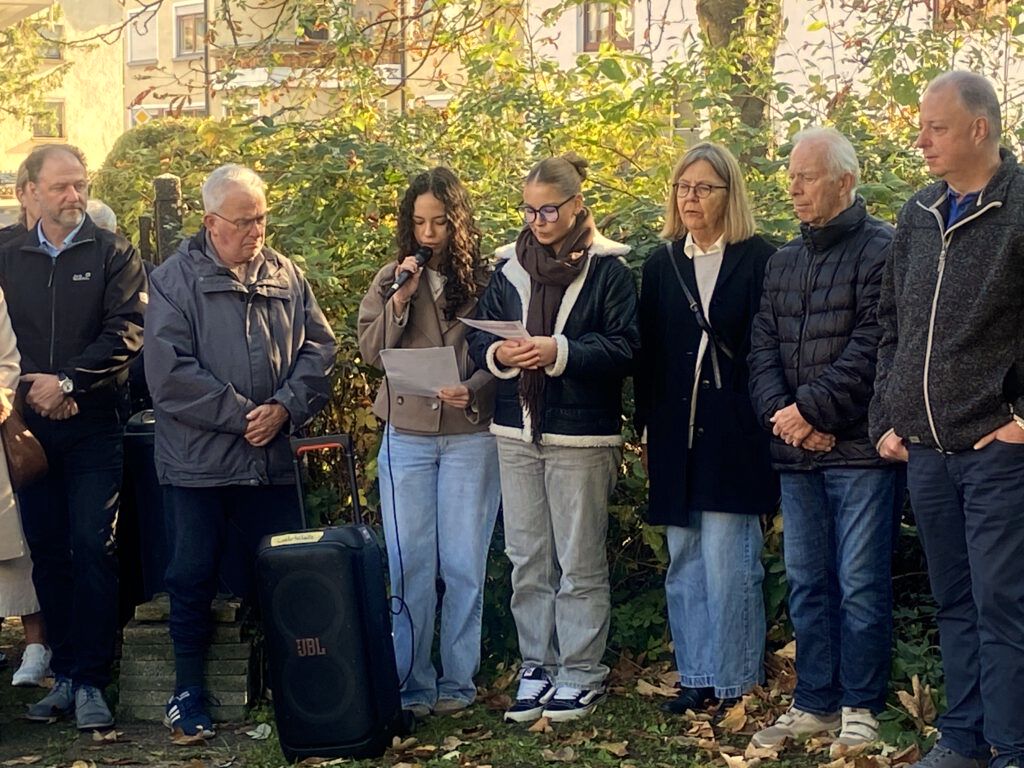
Hedwig Dangelmaier (to their right: Sabine Schlotter).
(15.10.2025 Sabine Schlotter/ce/at/wb)


Leave a Reply